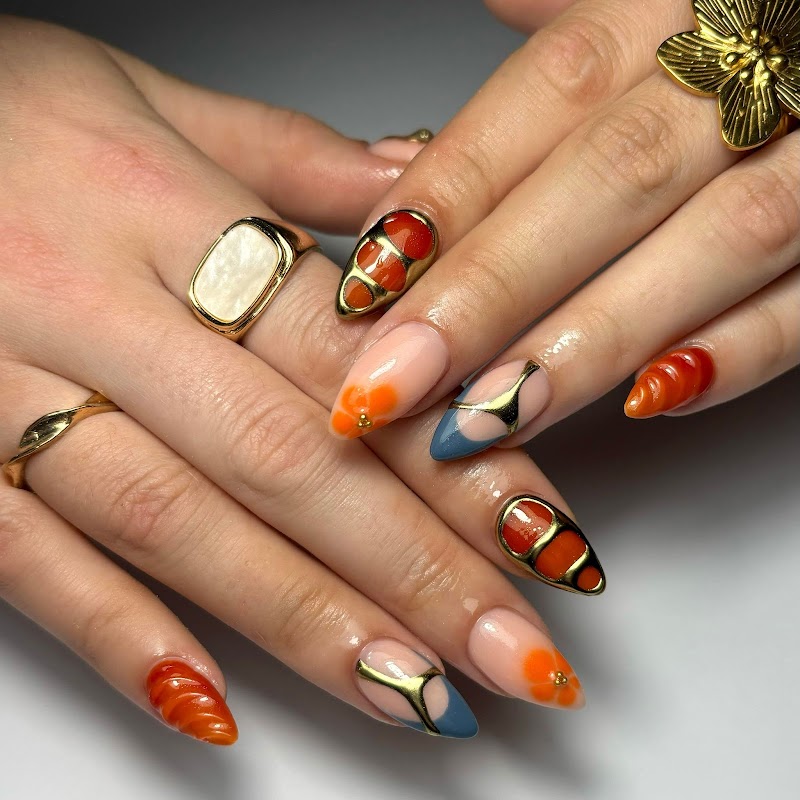
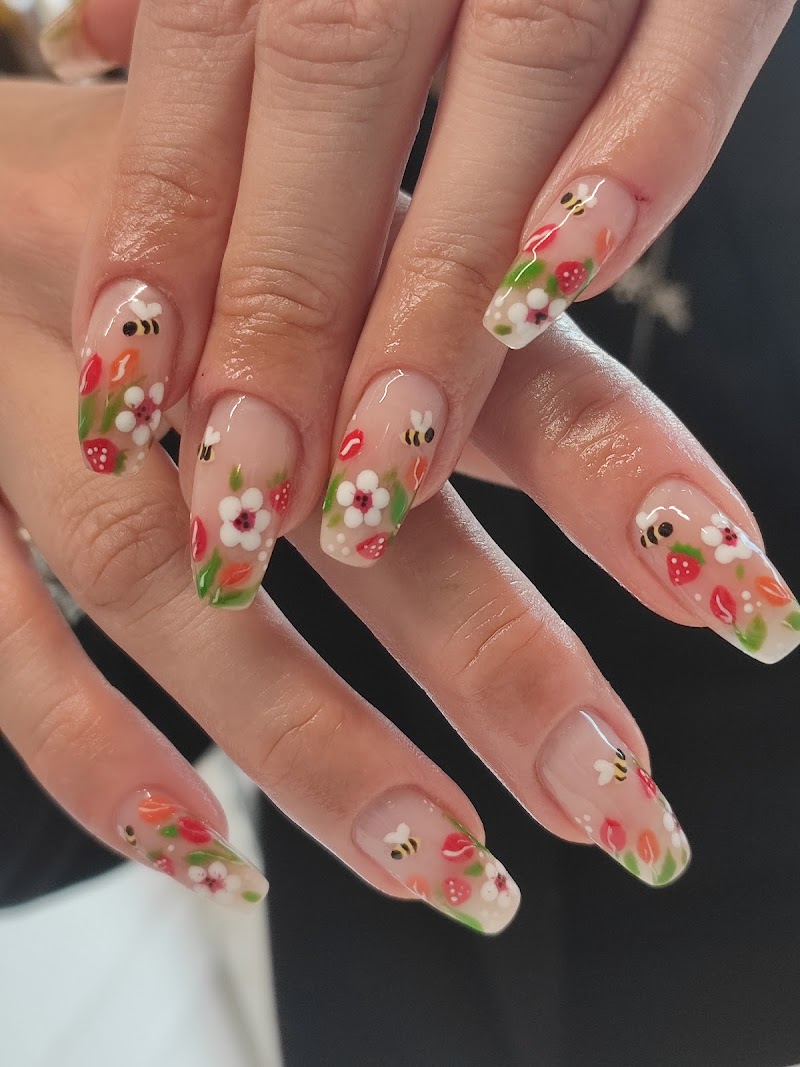
♡ Tap a heart to save a look
View style board →Quick Facts
- Comparing
- Gel Polish vs Shellac
- Shellac is
- A brand (CND)
- Lasts
- 2 – 3 weeks (both)
- Removal
- Soak-off (both)
- Key difference
- Shellac is thinner
NailAtlas Editorial
Guidance grounded in market data from the 3,300+ nail salons we've indexed.
Some product links below go to Amazon. If you buy through one, NailAtlas earns a small commission at no extra cost to you. We only link to products this guide already recommends, and no brand has paid for a mention.
Shellac is not a different product from gel polish, it is a brand name. CND Shellac was one of the first hybrid gel-polish systems, and the name became so popular that many people now use “shellac” to mean “gel nails” the same way people say “Hoover” for vacuum cleaners.
Short answer
Shellac is gel polish. Same chemistry. Same wear time. Same removal process. “Shellac” is a brand owned by CND; “gel polish” is the category that brand belongs to. Generic gel polish from OPI, Gelish, The GelBottle or Bio Sculpture performs almost identically. The variable that actually matters is the technician applying it.
What Shellac Actually Is
Shellac is a specific brand of hybrid nail colour made by CND (Creative Nail Design). It launched in 2010 and was revolutionary at the time — the first commercially successful product to combine the brush-on ease of nail polish with the durability and shine of a cured gel. It is applied in thin coats, cured under UV or LED light, and removed with an acetone soak.
The CND brand exploded almost immediately. Salons everywhere added Shellac to their menu. The trademark became so synonymous with “long-wearing gel manicure” that customers started asking for “Shellac” regardless of which gel polish the salon actually used. CND has spent years defending the trademark against generic use, with limited success.
Since 2010, dozens of equivalent hybrid gel-polish systems have launched: OPI GelColor, Gelish (Nail Alliance), The GelBottle, Bio Sculpture, Bio Seaweed Gel, Orly Gel FX, Essie Gel Couture and many more. They all use the same underlying chemistry — methacrylate monomers triggered to cure by a UV/LED photoinitiator — and produce nearly identical results.
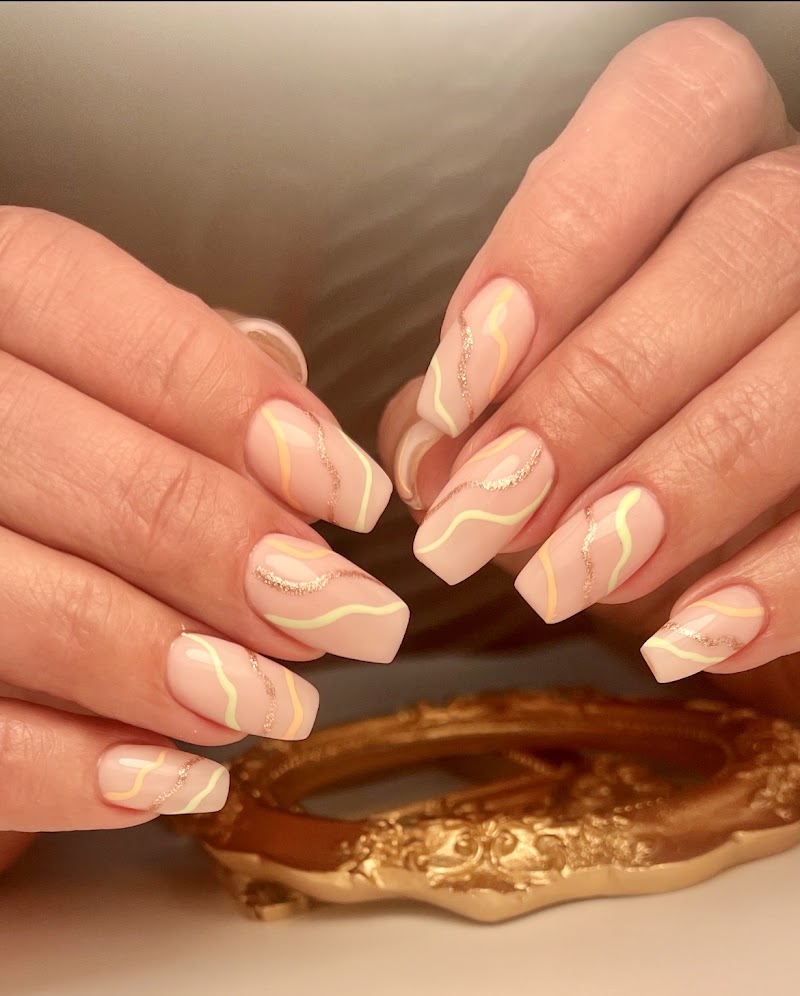
Gel Polish vs Shellac: Side by Side
| Factor | CND Shellac | Generic Gel Polish |
|---|---|---|
| What it is | Brand-specific hybrid gel | Category term (many brands) |
| Curing method | UV/LED lamp | UV/LED lamp |
| Durability | 2-3 weeks | 2-3 weeks (varies by brand) |
| Removal | Acetone soak-off | Acetone soak-off |
| Thickness on nail | Very thin | Thin to moderate |
| Adds strength | No (colour only) | No (colour only) |
| Colour range | ~120 shades | 300+ across brands |
| Price at salon | £25-£40 / $30-$55 | £20-£40 / $25-$55 |
The Other Brands People Call “Shellac”
When you ask for “Shellac” at a salon, you might actually be getting one of these:
- OPI GelColor: The biggest brand by salon distribution. Huge colour range, thin viscosity, reliable cure. Often the default in mid-tier salons.
- Gelish (Nail Alliance): The strongest direct competitor to Shellac in the US. Long-wearing, good pigment density, popular with nail-tech educators.
- The GelBottle: UK-favoured premium brand. Very thin application, exceptional colour saturation. Popular in independent London salons.
- Bio Sculpture / Bio Seaweed Gel: Marketed as “5-free” or “9-free” (i.e. without specific solvents and photoinitiators). Slightly thicker viscosity. Favoured by clients with sensitivity concerns.
- Orly Gel FX, Essie Gel Couture: Mass-market brands with strong drugstore reach but more variable salon distribution.
All of them cure under the same lamps, last 2–3 weeks, and remove with acetone. Brand differences come down to colour range, viscosity, and salon distribution rather than performance on the nail.
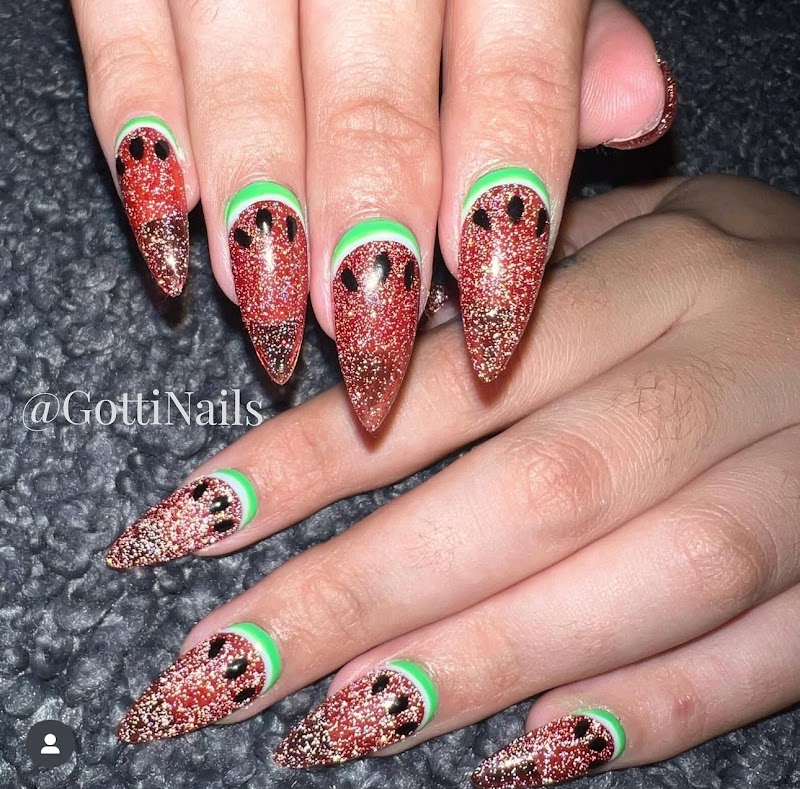
Two Gemini girls
Gel nail colour options
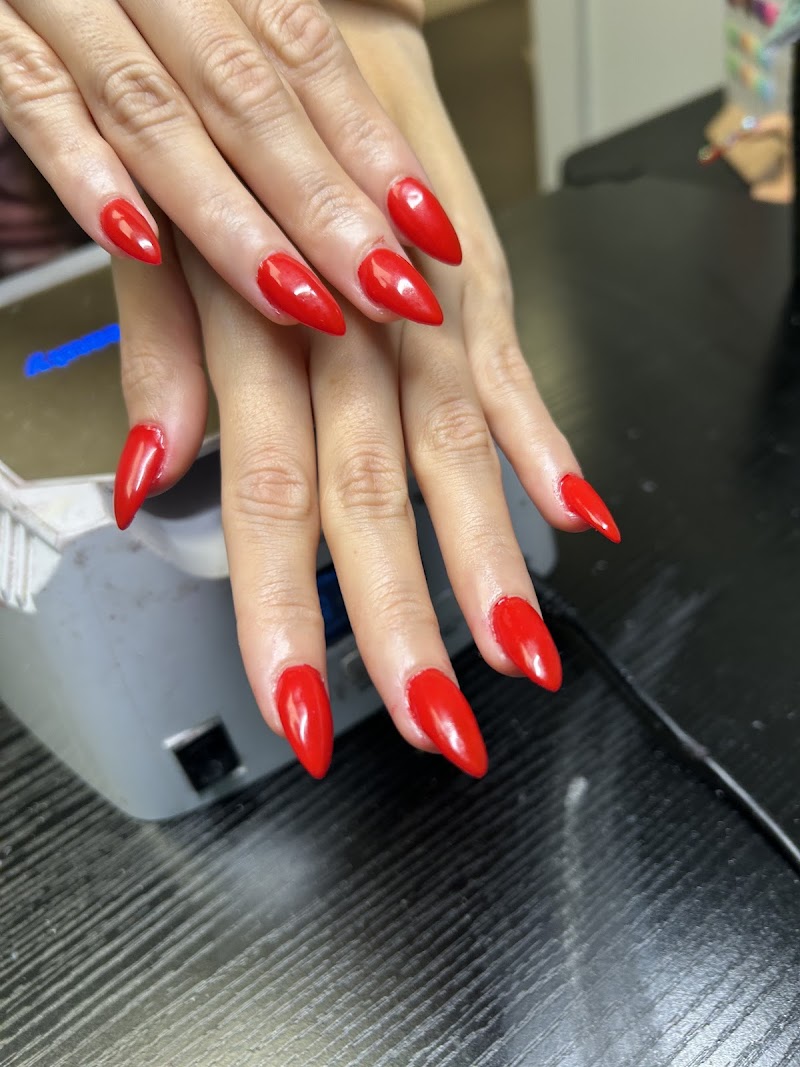
Black Jade Nails & Co
Gel nail colour options
Shellac vs Hard Gel vs Builder Gel — Don't Confuse Them
Three products use the word “gel” but do completely different jobs. This is where most confusion at the salon starts.
| Product | What it does | Thickness | Adds length? |
|---|---|---|---|
| Gel polish (Shellac) | Long-wearing colour | Very thin | No |
| Builder gel (BIAB) | Strengthening overlay | Medium | A few mm only |
| Hard gel | Sculpted extensions | Thick, filed | Yes (any length) |
If your nails break easily, you want builder gel / BIAB, not gel polish — gel polish adds no strength to a thin or weak nail plate. If you want real length beyond your natural nail, you want Gel-X or hard gel extensions. Gel polish (Shellac) is colour only.
How a Gel or Shellac Manicure Is Applied
The process is identical regardless of brand. Total chair time is usually 45–75 minutes for plain colour.
- Cuticle prep: Cuticles are pushed back and any non-living skin is gently removed. Without this step the polish lifts at the base within days.
- Nail surface prep: The nail plate is lightly buffed to remove shine, then wiped with a dehydrator and primer. This is what makes gel actually adhere.
- Base coat: One thin layer of gel base coat, cured under UV/LED for 30–60 seconds.
- Two colour coats: Two thin layers of gel polish, each cured separately. Thin layers cure fully; thick layers stay tacky underneath and lift early.
- Top coat: One layer of glossy or matte top coat, cured.
- Cleanse: The tacky inhibition layer left by curing is wiped off with isopropyl alcohol.
What you can spot as quality: thin layers, proper cuticle prep, full cure time under the lamp (under-curing is the #1 cause of early chipping), and a clean finish line at the cuticle. If your tech is rushing the lamp time, the manicure won't last.
How Gel Polish and Shellac Are Removed Safely
Both products remove the same way: acetone soak-off, 10–15 minutes per hand. The top coat is filed off lightly first to break the seal, then acetone-soaked cotton is wrapped to each nail with foil. The softened gel is scraped off gently with a wooden cuticle pusher. Done properly, the natural nail underneath should be intact.
What NOT to do: peel gel off when it starts lifting. Peeling pulls away the top layer of the natural nail plate with it, leaving the nail thin, weak and damaged for months. If gel is lifting and you can't get to a salon, file the surface down rather than pulling. Full step-by-step: how to remove gel nails safely.
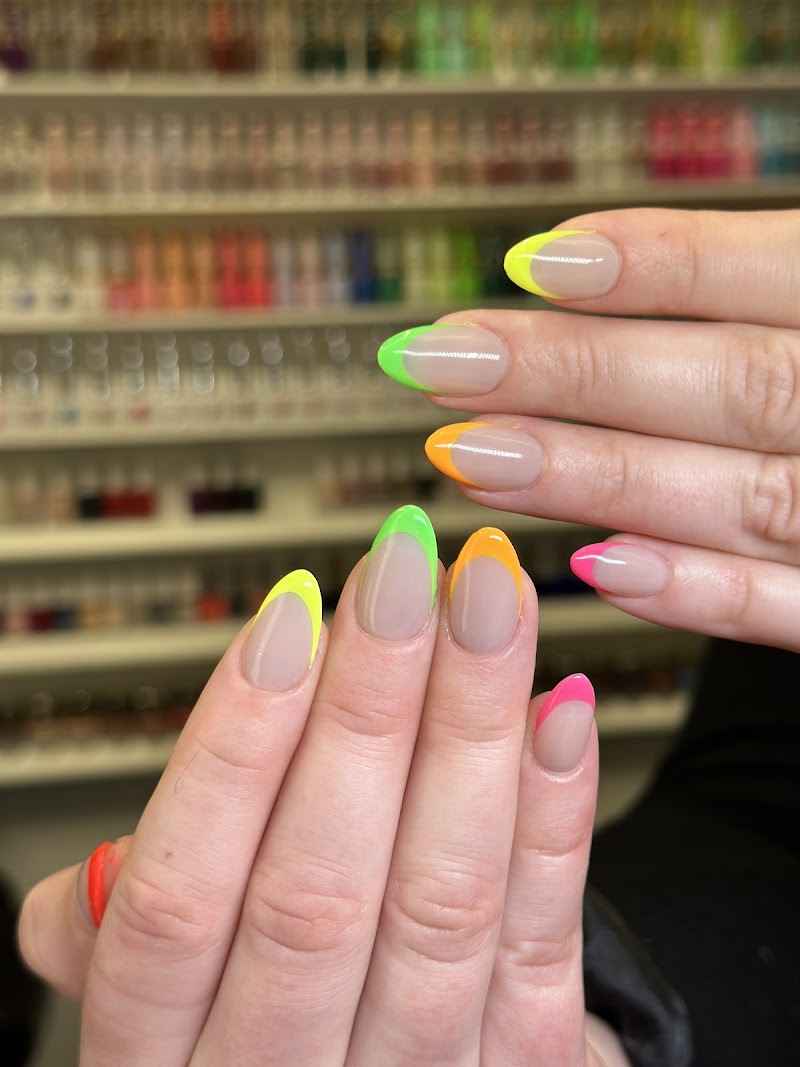
Big Apple Art
Classic gel manicure styles
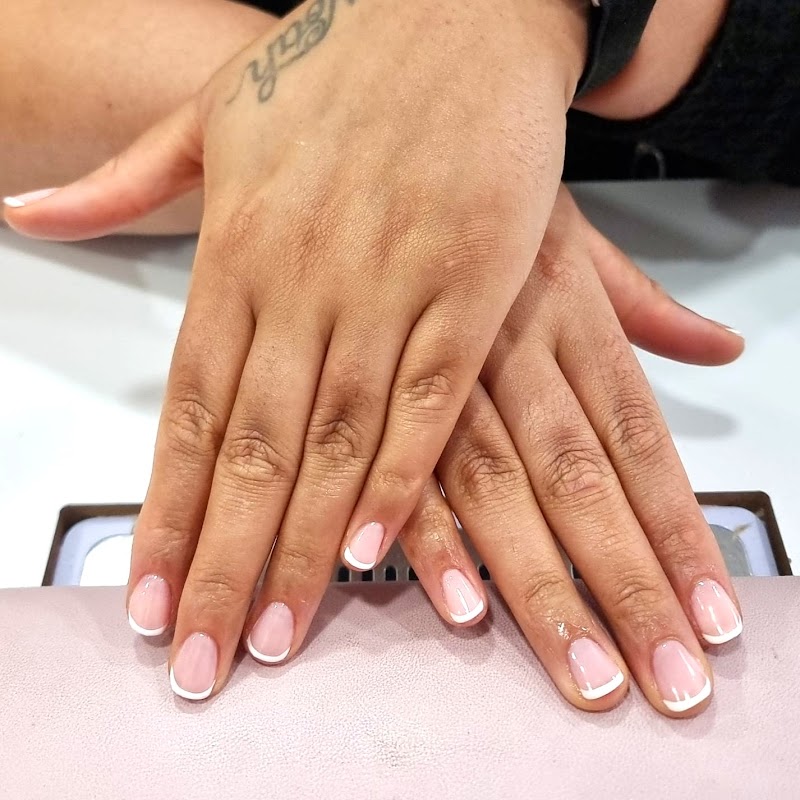
Naiyah Nails - Luxury BIAB & Russian Manicure Salon Brixton
Classic gel manicure styles
Is Shellac Safe? TPO, UV Lamps, and What to Actually Worry About
Two health questions come up around gel polish and Shellac. Both have nuanced answers.
1. TPO — the photoinitiator question. Some older hybrid gel-polish formulations used TPO (trimethylbenzoyl-diphenylphosphine-oxide) as the photoinitiator — the chemical that triggers curing under UV light. The EU banned TPO in cosmetic products effective September 2025 over reproductive-toxicity concerns. CND, OPI, Gelish and other major brands have reformulated with safer alternatives such as BAPO and TPO-L. When buying at-home kits or asking your salon about a specific brand, you can ask “is this the TPO-free reformulation?” — any reputable brand will answer yes. UK-distributed product reformulated alongside the EU change.
2. UV lamps and skin cancer. Concerns about skin cancer from gel-curing lamps periodically resurface. The peer-reviewed evidence is reassuring. LED lamps (now standard in salons) emit a tiny fraction of the UV dose you receive from 10 minutes outdoors. A monthly gel manicure is not a meaningful skin-cancer risk for most people. If you're cautious, apply a broad-spectrum sunscreen to your hands before the service, or wear fingerless UPF50+ gloves made for gel lamps.
The more practical risk is allergy sensitisation from uncured monomer touching skin during application. If you develop itchy, peeling fingertips after gel services, the cause is usually sloppy application getting product onto cuticle skin, not the cured product itself. A skilled technician avoids this. See safest nail treatments for the full breakdown.
Which Should You Get?
Match the product to what you actually want.
- Long-wearing colour on your natural nails: Gel polish (Shellac, OPI GelColor, Gelish — any reputable brand). 2–3 weeks of wear, removable in 15 minutes. £20–£40 / $25–$55.
- Your nails break easily and you want them to stop: Builder gel / BIAB. Overlay strengthens the natural nail underneath the colour. £35–£55 / $45–$70.
- You want real length: Gel-X (soft gel extensions) or hard gel (sculpted). Both add length; pick by removal preference (Gel-X soaks off, hard gel files off). £45–£70 / $60–$95.
- Lowest commitment, easiest removal: Regular nail polish. 5–7 days of wear, removes with normal polish remover. £8–£15 / $10–$20.
When to Upgrade Beyond Gel Polish
Gel polish and Shellac are colour treatments only. They do not add structural strength to the nail. If you have weak or brittle nails, constantly break nails, or want longer nails than your natural length, consider upgrading to:
- BIAB, strengthening overlay for natural nail growth
- Gel-X, soft gel extensions for length
- Hard Gel, sculpted extensions for extreme shapes
The Bottom Line
When a salon advertises “shellac nails” they almost certainly mean gel polish — either genuine CND Shellac or a generic equivalent. The products perform identically in practice. If you're happy with 2–3 weeks of wear and want a colour-only treatment, the brand on the bottle doesn't matter. Focus on the technician's prep and application skills, ask about the TPO-free reformulation if it concerns you, and never peel gel off when it lifts.
Gel Polish vs Shellac: FAQ
Is Shellac the same as gel polish?▼
Yes — Shellac is gel polish. Specifically, it's the CND-branded version that started the hybrid-polish category in 2010. The category has since exploded (OPI GelColor, Gelish, The GelBottle, Bio Sculpture, plus salon-tier brands), and most people now use "Shellac" as a catch-all for any gel polish. If you ask for a Shellac manicure, you're almost certainly getting a generic gel polish unless the salon specifically stocks CND.
What's the difference between Shellac and regular nail polish?▼
Regular polish air-dries on the nail and chips within 3–7 days. Shellac (and other gel polishes) cures under a UV/LED lamp into a hard glossy layer that lasts 2–3 weeks without chipping. You can't remove Shellac by wiping with regular polish remover — it needs an acetone soak. That tradeoff (longer wear, slower removal) is what makes gel polish different from regular polish.
Is hard gel the same as Shellac?▼
No. Hard gel is a structural sculpting medium — applied thick, filed and shaped, used to build length and strength. Shellac is a thin colour coat applied to the natural nail. They use similar curing chemistry but they're different products doing different jobs. Hard gel files off; gel polish soaks off.
Is builder gel (BIAB) the same as Shellac?▼
No. Builder gel — sometimes sold as BIAB, "Builder In A Bottle" — is a strengthening overlay applied between the natural nail and any colour coat. Shellac is the colour coat. You can have Shellac applied over a builder-gel base, but the two products do different jobs. Choose builder gel if your nails are weak or breaking.
Does Shellac contain TPO?▼
Some older hybrid gel-polish formulations used TPO (trimethylbenzoyl-diphenylphosphine-oxide) as a photoinitiator. The EU banned TPO in cosmetic products effective September 2025 over reproductive-toxicity concerns. CND, OPI, Gelish and other major brands have reformulated with alternatives like BAPO or TPO-L. When buying at-home kits or asking your salon, you can ask "is this the TPO-free reformulation?" — any reputable brand will answer yes.
Is Shellac the same as Gel-X?▼
No. Shellac is gel polish — colour applied directly to the natural nail. Gel-X is a soft-gel extension system: pre-shaped tips glued to the natural nail with gel base and cured under a lamp, adding length. You can have Shellac applied over a Gel-X set, but they're different products doing different jobs.
How long does Shellac last vs other gel polishes?▼
Roughly the same — 2–3 weeks of wear before noticeable lifting or growth. Shellac and most modern gel-polish brands use comparable chemistry. The bigger driver of wear time is the prep and application by your tech: a salon that buffs, dehydrates and applies thin layers will deliver 3 weeks of either; sloppy prep delivers 5 days of either.
Can you apply gel polish over Shellac (or vice versa)?▼
Yes — they're compatible because they're the same category of product. A salon will often top up or refresh a worn Shellac with any compatible gel polish. If full removal is needed it's the same acetone-soak process regardless of brand.
Why is Shellac more expensive than other gel polishes at some salons?▼
Genuine CND Shellac costs more per bottle than most generic gel polishes, and CND-certified salons pay for that brand designation. Whether to pay the premium is a different question — the wear time and finish are usually identical to a well-applied generic gel. The skill of the technician matters more than the brand on the bottle.
Do UV lamps used for Shellac cause skin cancer?▼
The peer-reviewed evidence is reassuring. LED-curing lamps (now standard in salons) emit a tiny fraction of the UV dose you receive from 10 minutes outdoors. A monthly gel manicure is not a meaningful skin-cancer risk for most people. If you want to be cautious, apply broad-spectrum sunscreen to your hands before the service or wear UV-protection fingerless gloves (~£10 on Amazon).
What's the difference between Gelish and Shellac?▼
Almost none in practice — both are hybrid gel polishes that cure under a UV/LED lamp and last 2–3 weeks. Shellac is CND's brand; Gelish is made by Nail Alliance and is the strongest direct competitor in the US. Pigment density and colour range differ slightly, but on the nail the wear, finish and acetone removal are effectively identical. The same goes for "bio gel" — usually a reference to Bio Sculpture gel polish, another brand in the same category.