♡ Tap a heart to save a look
View style board →Quick Facts
- Comparing
- Acrylic vs Gel
- More natural look
- Gel
- Harder, holds length
- Acrylic
- Easier removal
- Gel
- Full set (US)
- $45–$95 vs $60–$140
NailAtlas Editorial
Guidance grounded in market data from the 3,300+ nail salons we've indexed.
Gel is the better choice for most people. Acrylic is the better choice for extreme length on a budget. Below they are compared on cost, wear, removal and nail damage, with prices from the salons in the NailAtlas directory.
Short answer
Acrylic is harder and cheaper, so it wins for extreme length and dramatic sculpted shapes. Gel flexes, has almost no odour, and soft gel and BIAB soak off rather than being drilled off, which is why gel tends to do less damage to the natural nail. Neither truly “lasts longer”: both get you roughly 2–5 weeks, and the real driver of wear is the technician's prep, not the product. Pick acrylic for length on a budget; pick gel for nail health and feel.
What Are Acrylic Nails?
Acrylics are made by combining a liquid monomer with a powder polymer into a paste that hardens in air. The reaction creates a hard, durable plastic that can be sculpted into any shape. Acrylic has been the industry standard for nail extensions for decades, and it is still the most widely offered enhancement in the NailAtlas directory.
- Pros: Extremely strong; cheapest extension option; easy to fill and repair; works with every shape.
- Cons: Strong chemical odour; can be rough on the natural nail during application and removal; rigid feel; removal needs a drill or a long soak.
What Are Gel Nails?
Gel nails come in several forms: soft gel (gel polish and Gel-X extensions), hard gel (builder gel) and overlays like BIAB. All of them cure under a UV or LED lamp rather than in air. The result feels more flexible and natural than acrylic, with a shinier finish.
- Pros: Almost no odour; flexible, natural feel; softer on natural nails; better shine; soft gel and BIAB soak off.
- Cons: Gel extensions cost more than acrylic; soft gel is less durable at extreme length; hard gel has to be filed off; not every tech is equally skilled with every gel system.
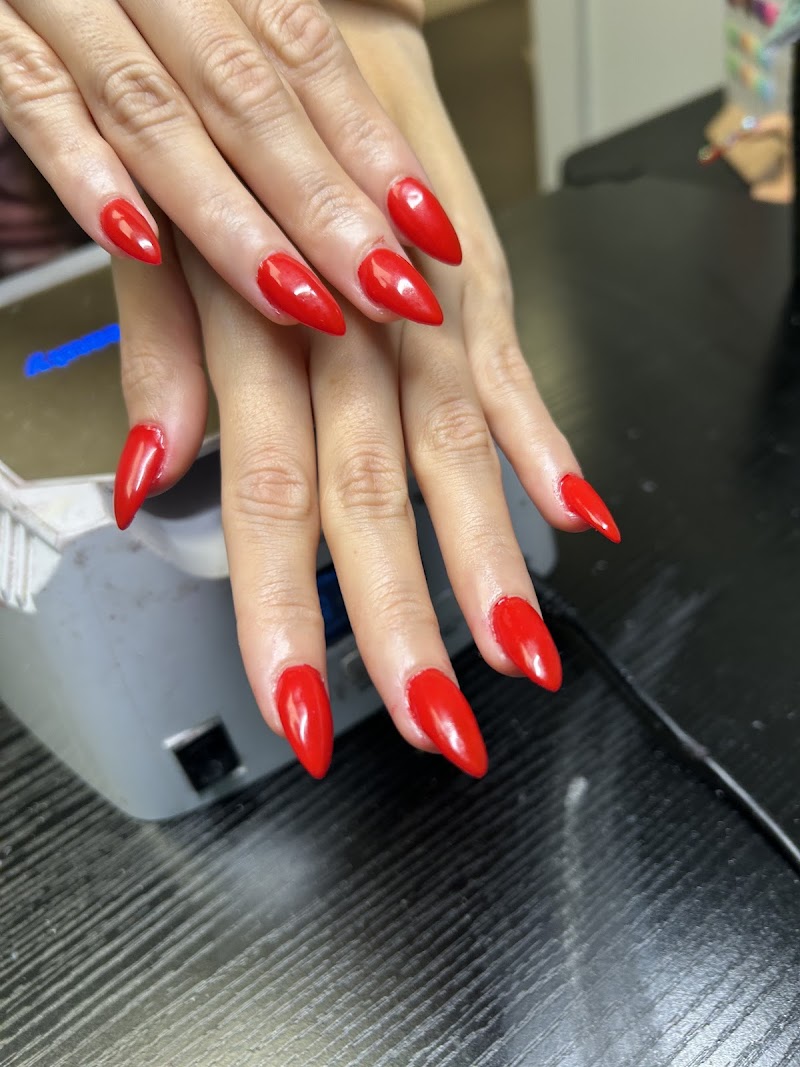
Black Jade Nails & Co
Gel-X specialist
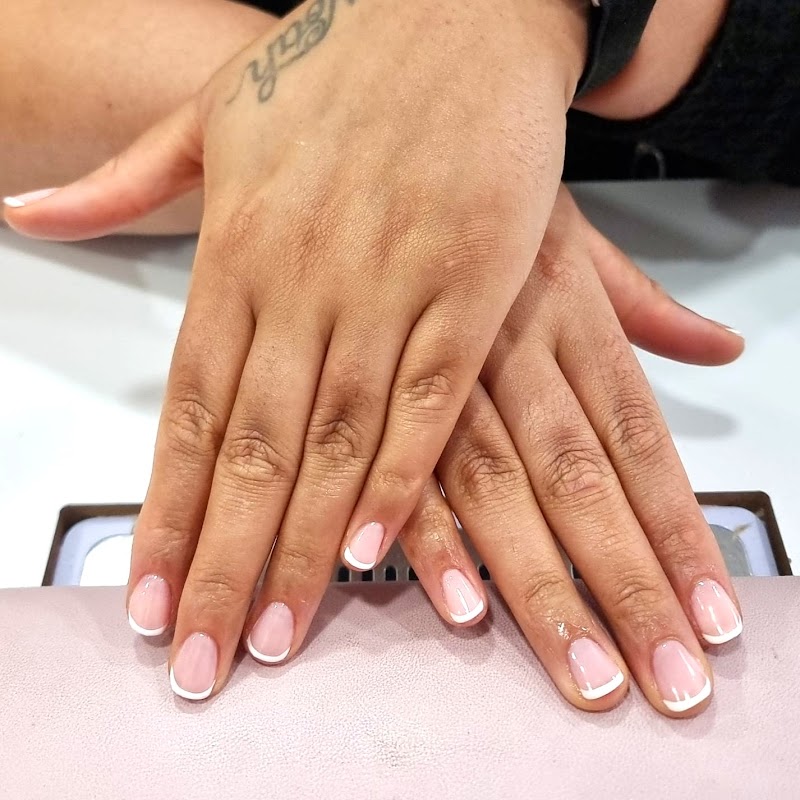
Naiyah Nails - Luxury BIAB & Russian Manicure Salon Brixton
Gel-X specialist
Side-by-Side Comparison
| Factor | Acrylic | Gel |
|---|---|---|
| Curing method | Air (chemical reaction) | UV/LED lamp |
| Flexibility | Rigid | Flexible (especially soft gel) |
| Odour during application | Strong chemical smell | Minimal to none |
| Nail health impact | Higher (with a careless tech) | Lower (applied correctly) |
| Full set, US cities | $45–$95 | $60–$110 Gel-X; $65–$140 hard gel |
| Full set, London | £40–£75 | £55–£100 Gel-X; £60–£110 hard gel |
| Removal | 30–45 min soak, or filed down | Soft gel and BIAB: 10–20 min soak. Hard gel: filed off |
| Lasts | 2–4 weeks | 3–5 weeks (product dependent) |
| Best for extreme length | Yes | Hard gel only |
What Acrylic and Gel Cost in Each City
These are typical full-set prices from the technique listings in the NailAtlas directory. Acrylic is the cheapest extension in every city we cover, and Gel-X and hard gel cost more everywhere. BIAB is an overlay on your own nail rather than an extension, which is why it can come in at or under acrylic, most clearly in London.
| City | Acrylic | Gel-X | BIAB | Hard gel |
|---|---|---|---|---|
| New York | $55–$95 | $70–$110 | $55–$90 | $80–$140 |
| Los Angeles | $50–$90 | $70–$105 | $55–$85 | $75–$130 |
| Miami | $45–$85 | $65–$100 | $50–$80 | $70–$120 |
| Chicago | $45–$80 | $60–$95 | $45–$75 | $65–$115 |
| London | £40–£75 | £55–£100 | £35–£55 | £60–£110 |
Each price links to the salons offering that technique in that city. Infills run roughly 60–75% of a full set; hand-painted art and extreme length are charged on top.
Which Lasts Longer: Acrylic or Gel?
It is closer than the marketing suggests. A well-applied acrylic set holds 2–4 weeks before a fill; gel extensions (hard gel or Gel-X) hold 3–5 weeks. Acrylic has the edge on raw staying power at extreme lengths because it is more rigid, but that same rigidity is why an acrylic nail snaps off cleanly under a hard knock, often taking a layer of natural nail with it. Gel flexes and lifts instead of shattering. Day to day, the gap is small: your prep and how hard you use your hands matter far more than acrylic versus gel.
Which Damages the Nail Less?
Gel, and removal is the main reason. Acrylic is usually filed or drilled down to remove the bulk, and that is where most acrylic-related nail thinning happens. Soft gel (Gel-X) and BIAB soak off in 10–20 minutes with no drill on the natural nail. Acrylic itself is not inherently destructive, and a skilled technician can apply and remove it with minimal damage, but the average acrylic removal is rougher than the average gel removal. If nail health is your priority, gel is the safer default for that reason alone.
Acrylic vs Gel: Removal Compared
Some product links below go to Amazon. If you buy through one, NailAtlas earns a small commission at no extra cost to you. We only link to products this guide already recommends, and no brand has paid for a mention.
Soft gel and BIAB removal is a 10–20 minute acetone soak: the top coat is buffed to break the seal, cotton soaked in 100% acetone is wrapped around each nail, and the softened gel is pushed off gently. Acrylic takes longer, a 30–45 minute soak or filing the bulk down first. Hard gel does not dissolve in acetone, so it is filed off like acrylic. Whichever you have, never pry or peel it off when it lifts: peeling tears away the top layer of the natural nail and leaves it thin for months. Full method: how to remove gel nails safely.
Which Should You Choose?
Choose acrylic if you want extreme length or a dramatic sculpted shape (stiletto, flare) at the lowest price, and you are fine with the strong smell and rigid feel. Find acrylic salons.
Choose gel if you prioritise nail health and a natural feel, and want a soak-off or low-damage removal. For extensions, look at Gel-X or hard gel. To strengthen your own nails without extensions, BIAB is the usual choice.
What the directory shows
Acrylic is still the most widely offered enhancement across the salons we list, and it remains the right tool for very long sets. Gel-X and hard gel cost more than acrylic in every city we cover, a premium that reflects longer appointments and gentler removal. If your preferred tech offers both, gel extensions are usually worth the extra for everyday wear.
Acrylic vs Gel Nails: FAQ
Which is better, acrylic or gel nails?▼
For most people, gel. It flexes with the natural nail, has almost no odour, and soft gel and BIAB soak off instead of being drilled off, so it does less damage over time. Acrylic still wins on two fronts: it is cheaper (a full set runs $45–$95 across the US cities in our directory, against $60–$110 for Gel-X) and it is harder, so it holds extreme length and sculpted shapes better.
How much do acrylic vs gel nails cost?▼
In the US cities we cover, a full acrylic set typically costs $45–$95, Gel-X $60–$110, hard gel extensions $65–$140 and a BIAB overlay $45–$90. In London, acrylic runs £40–£75, Gel-X £55–£100, hard gel £60–£110 and BIAB £35–£55. Infills cost roughly 60–75% of a full set, and hand-painted art or extreme length is charged on top.
Do gel nails last longer than acrylic?▼
Slightly. Acrylic holds about 2–4 weeks before a fill; gel extensions hold 3–5 weeks. Acrylic is more rigid, so it resists wear at extreme lengths, but the biggest driver of how long either lasts is the technician's prep and how hard you use your hands, not the product itself.
Are gel nails less damaging than acrylic?▼
Generally yes, and removal is the main reason. Acrylic is usually filed or drilled off, which is where most acrylic-related nail thinning happens. Soft gel (Gel-X) and BIAB soak off in 10–20 minutes with no drilling on the natural nail. Acrylic applied and removed by a skilled tech is not inherently destructive, but the average gel removal is gentler than the average acrylic removal.
Is acrylic harder than gel?▼
Yes. Acrylic cures into a rigid plastic, while gel cures into something flexible. That hardness is why acrylic holds extreme length without bending, and also why an acrylic nail snaps off cleanly under impact (often taking some natural nail with it), where gel tends to bend and lift instead. Hardness is not the same as durability.
Is gel removal easier than acrylic removal?▼
For soft gel and BIAB, yes: a 10–20 minute acetone soak, after which the gel pushes off cleanly. Acrylic needs a 30–45 minute soak or filing down the bulk first. Hard gel is the exception on the gel side: it does not dissolve in acetone and has to be filed off, so its removal is closer to acrylic's.
Can you put gel polish on acrylic nails?▼
Yes, and most salons do. Gel polish is the usual colour layer on an acrylic set because it cures hard and keeps its shine for the life of the set. At each fill the gel polish is soaked off and reapplied; the acrylic underneath stays.
How is gel polish different from acrylic powder?▼
Gel polish is a thick liquid brushed on and cured under a UV or LED lamp: no powder, no monomer, almost no smell. Acrylic uses a powder polymer dipped into a liquid monomer to make a paste that hardens in air. Different chemistry, different feel, different removal: gel polish soaks off in about 15 minutes, acrylic usually has to be filed or drilled down.
Is soft gel the same as acrylic?▼
No, the chemistry is completely different. "Soft gel" usually means Gel-X or a similar system: pre-shaped tips of flexible cured gel, bonded to the natural nail with gel and cured under a lamp. Acrylic is a two-part liquid-and-powder system that hardens in air. Soft gel is more flexible, lighter and easier to remove.
How does methacrylate (acrylic) compare to gel?▼
Methacrylate is the chemistry behind acrylic: methacrylate monomer reacting with a powder polymer in air. Gel uses related chemistry (typically urethane methacrylate) that cures under UV or LED light instead, ending up flexible rather than rigid. Same family of chemicals, very different result on the nail.
What's the difference between acrylic fills and gel fills?▼
An acrylic fill files down the lifted product near the cuticle and rebuilds it with fresh acrylic, usually with a drill, and can leave a faint line at the new growth. A gel fill removes the lifted gel and reapplies fresh gel under the lamp, with a smoother blend at the regrowth line. Both keep a set looking fresh every 2–3 weeks.
What are the pros and cons of acrylic vs gel nails?▼
Acrylic pros: cheapest extension option, very strong, holds extreme length, easy to fill and repair. Acrylic cons: strong odour, rigid feel, rougher removal. Gel pros: natural flexible feel, minimal odour, shinier finish, gentler soak-off removal for soft gel and BIAB. Gel cons: costs more, and soft gel is less suited to very long sculpted shapes.