NailAtlas Editorial
Guidance grounded in market data from the 3,300+ nail salons we've indexed.
♡ Tap a heart to save a look
View style board →Quick Facts
- Service
- Builder gel overlay
- Duration
- 60 – 90 min
- Lasts
- 3 – 4 weeks
- Price
- $45 – $75 / £35 – £55
- Best for
- Weak or growing nails
BIAB, short for Builder In A Bottle, is a thin gel overlay that strengthens and protects the natural nail underneath. It is the treatment most often recommended to nail-biters, people growing out acrylic damage, and anyone whose own nails snap or peel before reaching the length they want.
BIAB originated in the UK and is now widely available in NYC, LA and London — 320 salons in the NailAtlas directory advertise it as a primary service, more than any other builder-gel category we track.
What Does BIAB Stand For?
BIAB stands for Builder In A Bottle. It was originally a product name by The Gel Bottle Inc. (TGB), a UK-based brand, but the term has become a generic name for the broader category of soft builder gel products. Other brands sell equivalent products under different names — Calgel, Aprés Builder Gel, Orly Gel FX Builder, NSI Balance, and Mylee Builder Gel are the ones you will most often see on a salon menu. The technique is the same across all of them.
How Does BIAB Work?
BIAB is a thick, viscous builder gel applied directly to the natural nail and cured under a UV or LED lamp. Unlike standard gel polish, BIAB is formulated to build a thin, hard overlay that encapsulates the natural nail, adding structure, preventing breakage, and allowing the natural nail to grow underneath undisturbed.
- Applied in 1–2 thin layers directly onto the nail
- Cured under LED lamp (usually 60 seconds per coat)
- Can be filed and shaped before colour is added
- Finished with a gel top coat for shine and colour
- Removed by soaking in acetone — no drilling required
The BIAB Appointment, Step by Step
A first-time BIAB appointment usually takes 60–90 minutes. Here is what to expect:
- Prep: Your technician trims and shapes the natural nail, pushes back the cuticle (manually or with an e-file), and lightly buffs the surface to remove shine. BIAB needs less buffing than acrylic — if it feels aggressive, speak up.
- Dehydrate and prime: A nail dehydrator removes oils, then a thin primer is applied. This is the layer that lets BIAB bond cleanly to the natural plate.
- Build the apex: One thin BIAB layer is applied and cured. A second layer is shaped to form the apex — the slightly raised arch about a third of the way down the nail — which gives the manicure its strength.
- File to shape: Once cured, the BIAB is filed and refined into the final shape (almond, oval, square, etc.). A good technician spends time here — the shape is set in gel, so it will not budge for weeks.
- Colour: Gel polish, French tip or nail art is applied over the BIAB base, then cured.
- Top coat and finish: A gel top coat is cured, the tacky layer is wiped, and cuticle oil is massaged in.
How Long Does BIAB Last?
BIAB typically lasts 3–4 weeks with proper aftercare. Many clients go 4–6 weeks between fills, especially once the nail has had a few applications and become stronger. This is significantly longer than standard gel polish, which usually starts lifting or chipping at 2–3 weeks.
Most technicians do not recommend leaving the same BIAB on the nail for longer than 6 weeks. After that point, the regrowth gap at the cuticle is large enough for water to track underneath, which can encourage lifting and bacterial growth.
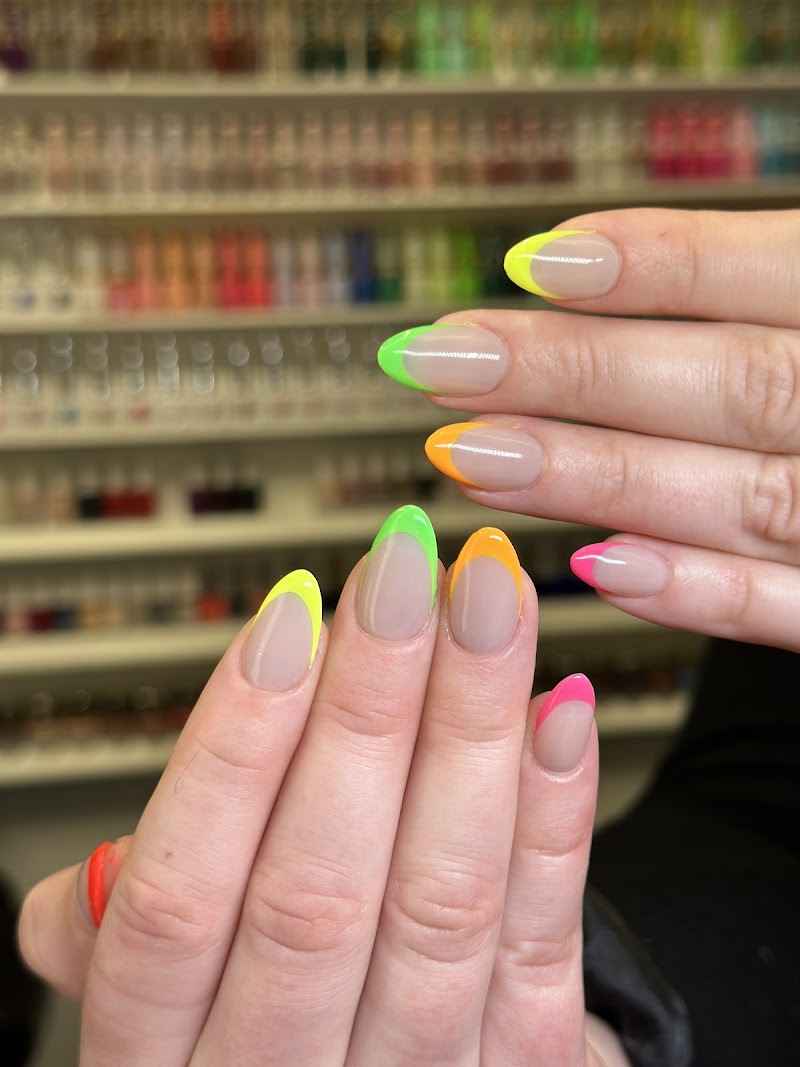
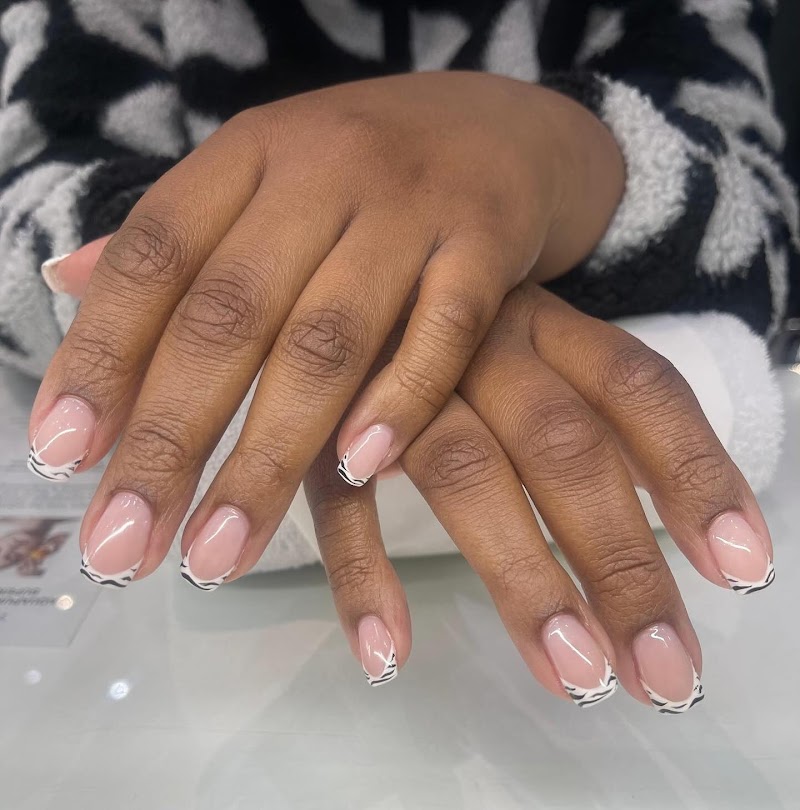
Big Apple Art
BIAB with French tip
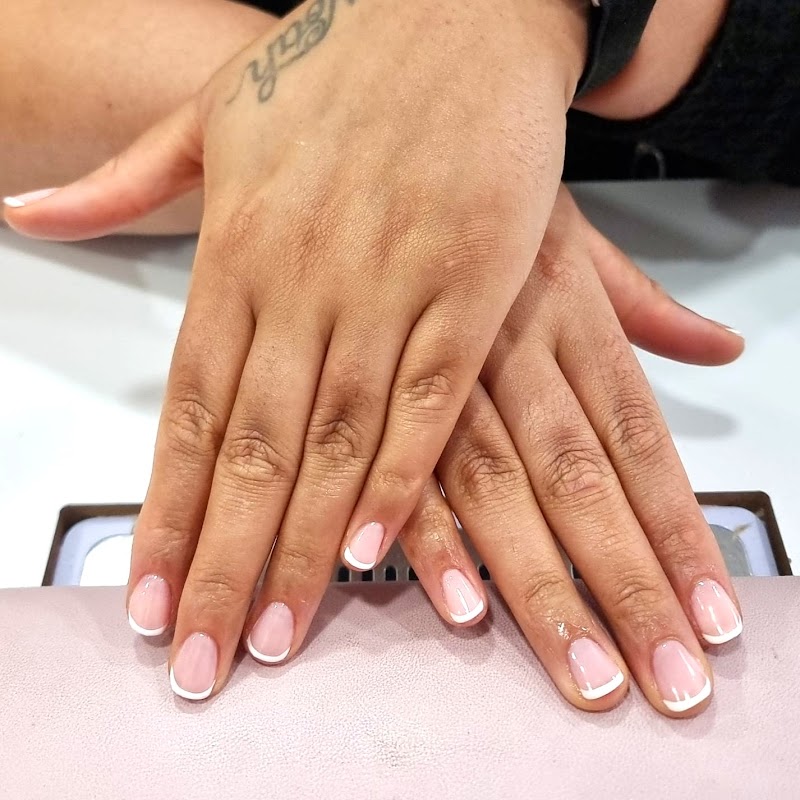
Naiyah Nails - Luxury BIAB & Russian Manicure Salon Brixton
BIAB with French tip
What Is a BIAB Infill?
A BIAB infill is the maintenance appointment you book at week 2–3 instead of a full removal. The technician removes the colour from your existing BIAB, e-files the regrowth area to blend the natural nail with the existing overlay, then adds a fresh BIAB layer over the grown-out gap and recolours.
Infills are faster (45–60 minutes), cheaper (typically 60–75% of a full set), and let you keep the same BIAB base for 2–3 months before a complete soak-off. This is the cost-efficient way to use BIAB long-term, and it is the model most BIAB-focused salons design their pricing around.
Is BIAB Good for Weak Nails?
Yes — this is where BIAB outperforms most other nail treatments. The overlay encapsulates and protects the natural nail. Unlike acrylics, which require significant buffing, BIAB is applied with minimal prep. With a skilled technician, BIAB is one of the most nail-friendly treatments available. Many nail biters and people who have previously damaged their nails with acrylics use BIAB specifically to grow out and strengthen their natural nails.
Who Should Not Get BIAB?
BIAB is gentler than most enhancements but it is not for everyone. Skip BIAB — or at least talk to your GP and your nail technician first — if you have:
- Active psoriasis or eczema around the nail plate. The prep and removal process can irritate flares.
- A known acrylate allergy. BIAB is acrylate-based. Reactions are rare but they do happen, and they can be permanent.
- Severely thinned or broken nail plates. Repeated acrylic damage needs time off. BIAB can help recovery, but only once the worst damage has grown out.
- An active fungal or bacterial nail infection. Treat the infection first.
- Sensitive skin or eyes that react to UV/LED lamps. Some people experience reactions to the cure cycle itself. A patch test before a full set is the safest route.
BIAB vs Gel Polish
| Factor | BIAB | Gel Polish |
|---|---|---|
| Thickness | Thick overlay (strength) | Thin (colour only) |
| Durability | 3–4 weeks | 2–3 weeks |
| Nail strengthening | ✓ Yes | ✗ No |
| Removal | Soak-off (15–20 min) | Soak-off (10 min) |
| Can add length | Slight extension possible | No |
| Average cost | £35–£55 / $45–$75 | £25–£40 / $30–$55 |
BIAB vs Gel-X vs Acrylic
The other two enhancements people compare BIAB to are Gel-X (soft-gel extensions) and acrylic. Quick verdicts:
- BIAB vs Gel-X: BIAB is an overlay on your natural nail; Gel-X bonds a pre-made soft-gel tip onto your nail for length. Choose BIAB to strengthen what you have. Choose Gel-X for length and shape that your natural nail cannot grow into. Full BIAB vs Gel-X comparison →
- BIAB vs Acrylic: Both are durable, but acrylic requires heavy buffing and is harder on the natural nail over time. BIAB is the lower-damage choice. Acrylic still wins for extreme length and very long-wear sets. Full BIAB vs Acrylic comparison →
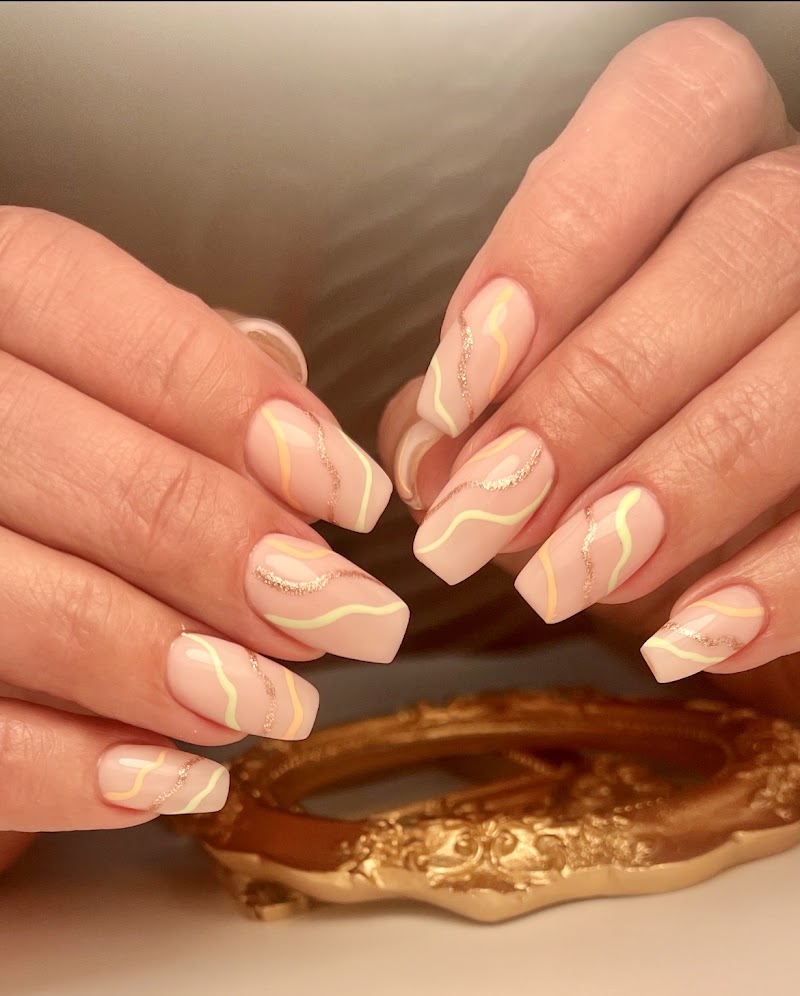
Evolution Nails LLC
Natural nail results with BIAB
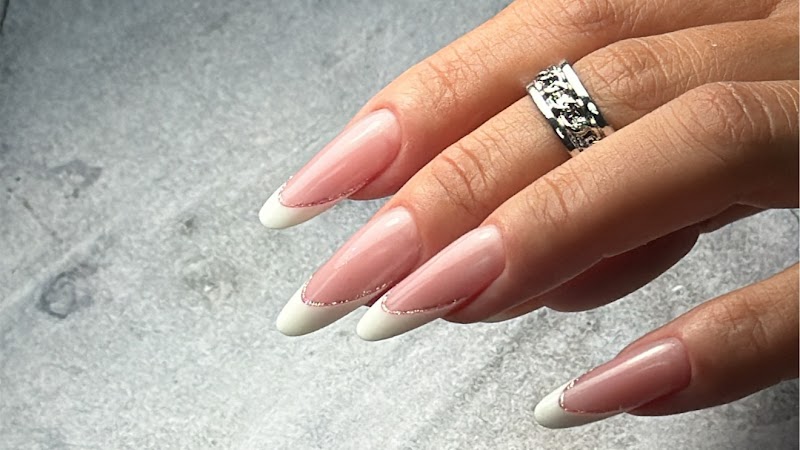
Lazarkova Nails LLC
Natural nail results with BIAB
How Much Does BIAB Cost?
In the UK, a BIAB manicure typically costs £35–£55. In the US, expect to pay $45–$75 in mid-tier cities and $55–$90 in NYC and LA, where studios that specialise in BIAB tend to operate on appointment-only models. Infills run about 60–75% of a full set — usually £25–£40 / $35–$55.
Across the NailAtlas directory, the cheapest authentic BIAB sets we see consistently are around £30 in outer-London boroughs and $45 in Brooklyn. Below that, the listing is usually a standard gel manicure being marketed as BIAB — worth asking before booking which brand of builder gel the technician actually uses.
Is BIAB Safe? The TPO Update
BIAB is one of the lower-risk gel treatments because it requires minimal nail-plate buffing and uses soak-off (not drill) removal. The two things worth knowing in 2026:
- TPO restriction (EU REACH, September 2025): The EU added TPO (trimethylbenzoyl-diphenylphosphine oxide), a photoinitiator used in many gel products including some early BIAB formulations, to its REACH restricted-substances list. Major brands — including The Gel Bottle — have reformulated. Products on shelf in the UK and EU in 2026 are TPO-free. In the US, the rule does not apply, but ask which brand your technician uses; reformulated US-market versions are widely available.
- Acrylate allergy: Rare but real. If your skin becomes itchy, red or blistered around the nail after a BIAB appointment, stop and see a dermatologist. Sensitisation can be permanent, which is why a patch test is worth it for first-timers.
How to Remove BIAB Safely
BIAB is removed with acetone, never with a drill. If a technician offers to drill BIAB off, walk away — that is acrylic-removal technique and it will thin the natural nail. The acetone wrap method takes 15–20 minutes:
- File the glossy gel top coat off so acetone can penetrate.
- Saturate a small cotton pad with 100% acetone and place on the nail.
- Wrap each finger in foil to hold the cotton in place and trap heat.
- Wait 15–20 minutes. The BIAB will look cloudy and start to flake off the edge.
- Gently push the softened gel off with a wooden cuticle pusher. Do not scrape or peel; if there is resistance, re-wrap for another 5 minutes.
- Buff lightly, wash, and apply cuticle oil and hand cream.
At-home removal is fine. At-home application is harder — BIAB needs a strong LED lamp, the right viscosity for your nail shape, and clean prep technique. Most people who try home BIAB end up with lifting at the edges within a week.
Who Is BIAB Best For?
BIAB is ideal for anyone with weak, brittle, or damaged nails who wants strength and longevity without the commitment or damage risk of acrylics. If you're new to nail treatments, BIAB is often the recommended starting point. If you want significant length, look at Gel-X. If you want a low-effort weekly colour, gel polish over the natural nail is cheaper.
Ready to try BIAB? Browse BIAB specialists on NailAtlas →
BIAB: FAQ
What Does BIAB Stand For?▼
BIAB stands for Builder In A Bottle. It was originally a product name by The Gel Bottle Inc. (TGB), a UK-based brand, but the term has become a generic name for the broader category of soft builder gel products. Other brands sell equivalent products under different names: Calgel, Aprés Builder Gel, Orly Gel FX Builder, NSI Balance, and many more. The technique is the same across all of them.
How Does BIAB Work?▼
BIAB is a thick, viscous builder gel applied directly to the natural nail and cured under a UV or LED lamp. Unlike standard gel polish, BIAB is formulated to build a thin, hard overlay that encapsulates the natural nail, adding structure, preventing breakage, and allowing the natural nail to grow underneath undisturbed.
How Long Does BIAB Last?▼
BIAB typically lasts 3–4 weeks with proper aftercare. Many clients go 4–6 weeks between fills, especially once the nail has had a few applications and become stronger. This is significantly longer than standard gel polish, which usually starts lifting or chipping at 2–3 weeks.
Is BIAB Good for Weak Nails?▼
Yes — this is where BIAB outperforms most other nail treatments. The overlay encapsulates and protects the natural nail. Unlike acrylics, which require significant buffing, BIAB is applied with minimal prep. With a skilled technician, BIAB is one of the most nail-friendly treatments available. Many nail biters and people who have previously damaged their nails with acrylics use BIAB specifically to grow out and strengthen their natural nails.
How Much Does BIAB Cost?▼
In the UK, a BIAB manicure typically costs £35–£55. In the US, expect to pay $45–$75 in mid-tier cities and $55–$90 in NYC, LA and other premium markets. Infills (where the grown-out base is refilled rather than fully removed) are cheaper, usually £25–£40 / $35–$55.
Is BIAB Safe? What About the TPO Ban?▼
BIAB is one of the lower-risk gel treatments because it requires minimal nail-plate buffing and uses soak-off removal. In September 2025, the EU added TPO (trimethylbenzoyl-diphenylphosphine oxide) — a photoinitiator used in many gel products including some early BIAB formulations — to its REACH restricted-substances list. Major brands including The Gel Bottle have since reformulated. If you are getting BIAB in the UK or EU, products on shelf in 2026 are TPO-free; in the US, ask your technician which builder gel and brand they use.
Who Should Not Get BIAB?▼
BIAB is gentler than most enhancements but it is not for everyone. Skip BIAB if you have active psoriasis or eczema around the nail plate, a known acrylate allergy (BIAB is acrylate-based), severely thinned or broken nail plates from repeated acrylic damage (let them recover first), or an active fungal or bacterial nail infection. People with sensitive skin should ask for a patch test before a full set.
What Is a BIAB Infill?▼
A BIAB infill is a maintenance appointment at week 2–3 where the technician removes the colour from your existing BIAB, e-files the regrowth area to blend the natural nail with the existing overlay, then adds a fresh BIAB layer over the grown-out gap and recolours. It is faster and cheaper than a full removal-and-redo, and it lets you keep the same BIAB base for 2–3 months before a complete soak-off.