NailAtlas Editorial
Guidance grounded in market data from the 3,300+ nail salons we've indexed.
Quick Facts
- Service
- Toenails, cuticles, hard skin
- Duration
- 30 – 60 min
- Interval
- Every 4 – 6 weeks
- Price
- $35 – $85 / £35 – £65
- Gel lasts
- 4 – 6 weeks
A pedicure is nail shaping, cuticle work, hard-skin reduction and polish, in a 30 to 60 minute appointment. The treatment itself is fairly standard everywhere. What actually varies between salons is the prep — how tools are cleaned, and whether your feet go into a shared basin.
975 salons in the NailAtlas directory list pedicures across New York, Los Angeles, London, Miami and Chicago.
What Happens in a Pedicure
- Prep. Either a soak, or a dry start. Both are legitimate — see the soak question below.
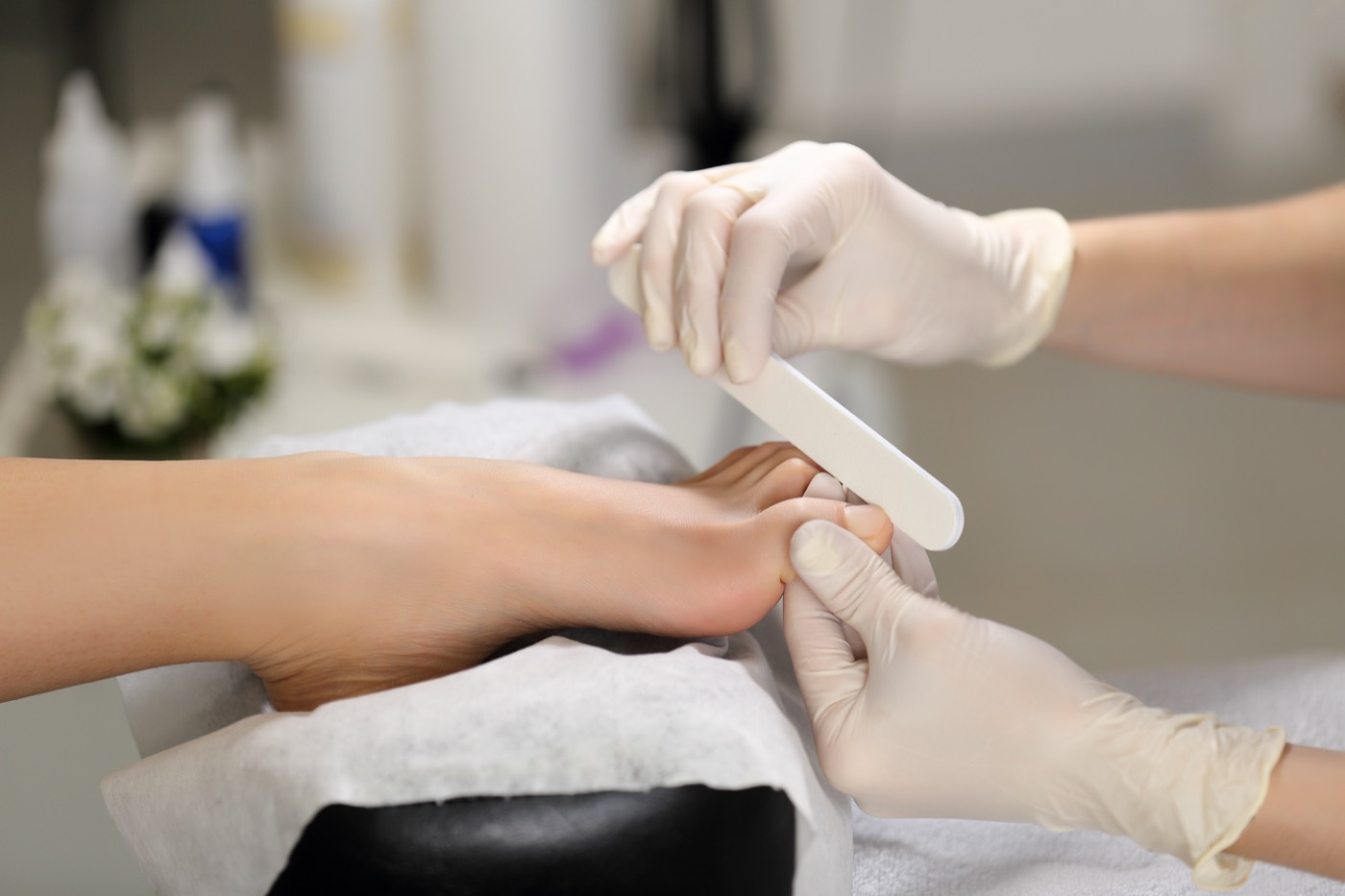
- Nails. Trimmed straight across and shaped. Curving the corners of a toenail down is what causes ingrowns, so a good technician keeps the edge square.
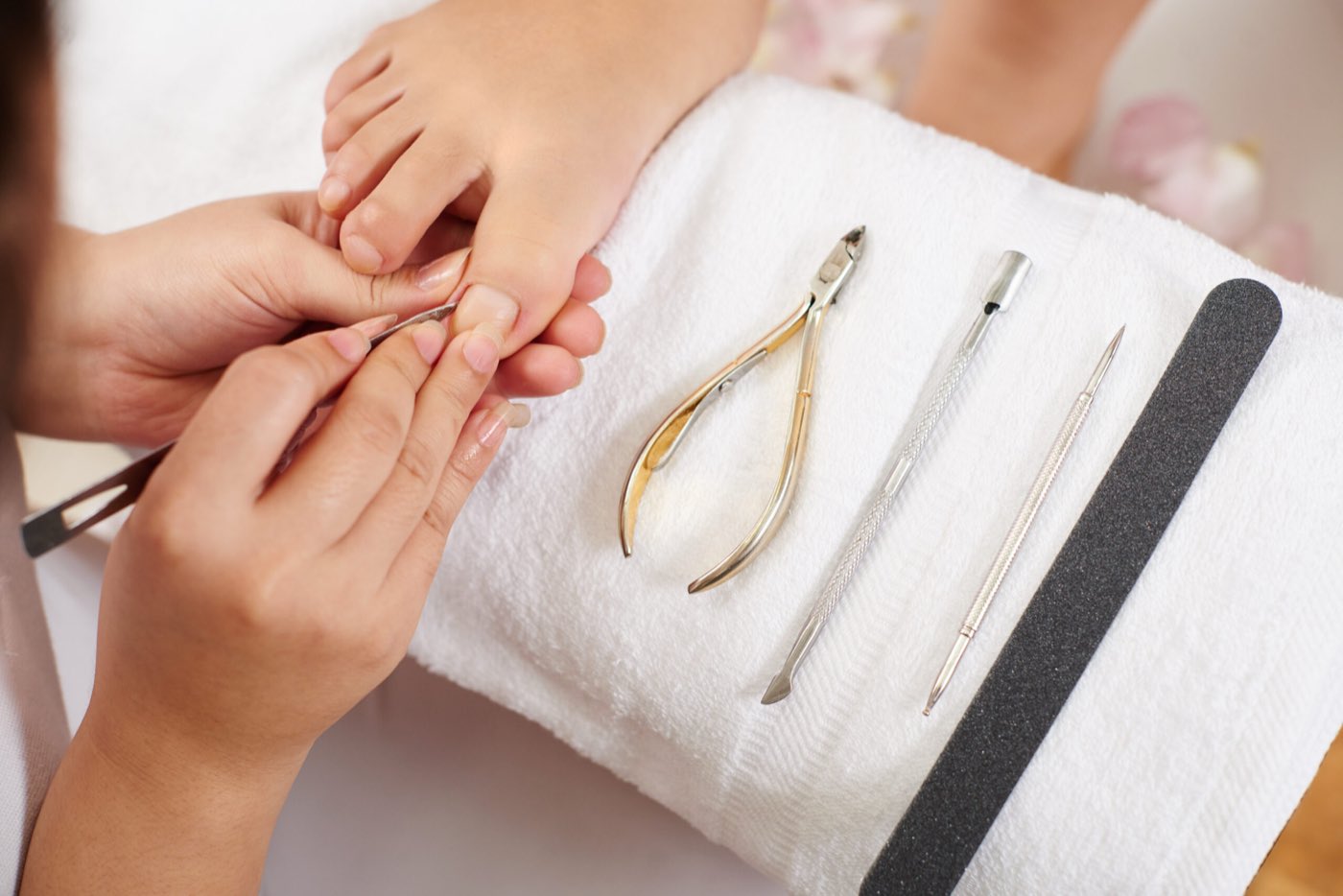
- Cuticles. Pushed back and tidied. Cutting living tissue is not part of the job.
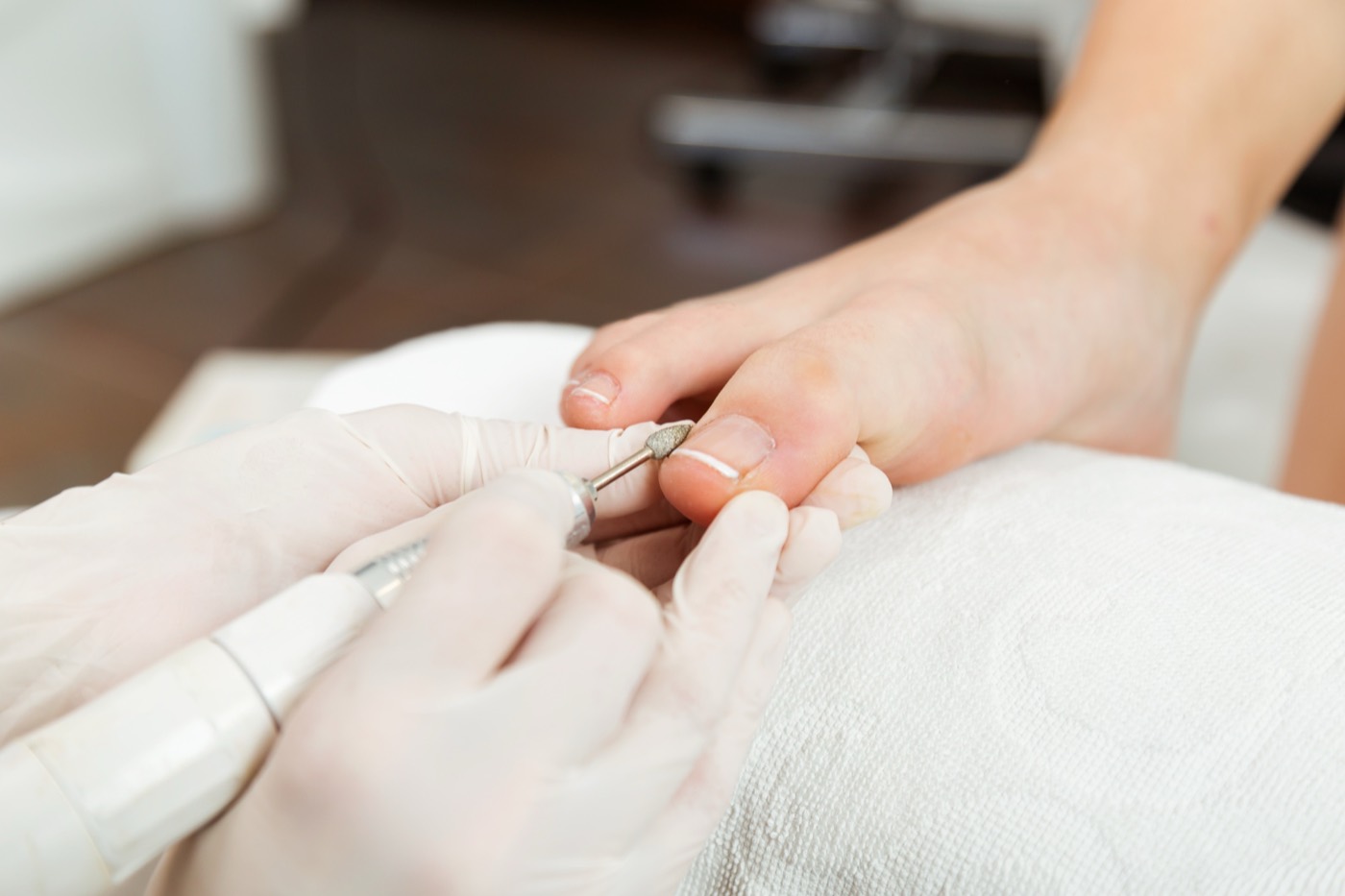
- Hard skin. Reduced with a file or a drill. Blade use is restricted to trained practitioners in many places.
- Massage and finish. Lotion, then polish or gel if you want colour.
The Types of Pedicure
| Type | What it adds | Typical US price |
|---|---|---|
| Standard | Shape, cuticles, hard skin, polish | $35 – $85 |
| Gel | Cured gel instead of polish — 4–6 weeks | $60 – $110 |
| Spa / deluxe | Longer massage, mask, exfoliation | $60 – $120 |
| French | A pale tip on the toenail | +$10 – $20 |
| Medical | Dry, sterile, health-focused — not cosmetic | $80 – $150 |
The medical pedicure is the odd one out — it is a health treatment rather than a beauty one, done dry with sterilised instruments and usually finishing without polish. Full medical pedicure guide →

Should Your Feet Be Soaked?
This is the question worth asking, and the answer is not the obvious one. A shared foot spa is the single part of a conventional pedicure with the clearest hygiene risk — the jets and pipework are difficult to clean properly between clients, which is where the horror stories come from.
Salons have gone two ways. Some use a disposable liner in the basin for every client. Others have dropped the soak entirely and work dry, which also gives more control over how much hard skin comes away. Both are fine. What you do not want is a basin with no liner and no visible cleaning between appointments.
Gel Pedicure vs Regular
Gel on toes outlasts gel on hands, often considerably. Toenails grow more slowly, and feet spend the day inside shoes rather than in and out of washing-up water. Four to six weeks is normal, and the reason to rebook is usually regrowth at the cuticle rather than chipping.
The trade-off is removal. Gel has to be soaked off, not picked or scraped — peeling it takes nail plate with it, exactly as on fingers. Ask whether removal is included or charged separately, because it is frequently a separate line on the bill. How to remove gel safely →
How Much a Pedicure Costs
| City | Standard | Gel |
|---|---|---|
| New York | $45 – $85 | $60 – $110 |
| Los Angeles | $40 – $75 | $55 – $95 |
| London | £35 – £65 | £45 – £80 |
| Miami | $35 – $70 | $50 – $90 |
| Chicago | $35 – $65 | $45 – $85 |
For how this sits against the rest of a salon menu, see the nail salon pricing guide →
How Often to Book
Every four to six weeks works for most people — roughly how long it takes toenail growth to become visible. Gel stretches further because the colour outlives the shape. In summer, when feet are on show and in sandals, people tend to move to a four-week rhythm; in winter, six to eight is common.
Four Questions Before You Sit Down
- Are the tools single-use or autoclaved? “We clean them” is not an answer.
- Is there a liner in the foot spa, or is the treatment dry?
- Do you use a blade on hard skin? A file or drill is the normal salon answer.
- How long is the appointment? Under 30 minutes is usually a polish change.
When to See a Clinician Instead
A salon pedicure is a beauty treatment. If you have diabetes, reduced circulation or reduced sensation in your feet, foot care should be directed by a doctor or podiatrist — a small nick you cannot feel is a different proposition for you than for someone else. The same goes for a suspected fungal nail or an inflamed ingrown toenail: that is a clinical appointment, not a beauty one.
Ready to book? Browse pedicure salons on NailAtlas →
Pedicures: FAQ
What Is a Pedicure?▼
A pedicure is a treatment for the toenails and feet: nails are trimmed and shaped, cuticles are tidied, hard skin is reduced, and polish is applied if you want it. A standard appointment runs 30 to 60 minutes. What separates salons is mostly the prep — whether tools are single-use or sterilised, and whether the treatment starts in a shared foot spa or is done dry.
How Much Does a Pedicure Cost?▼
In the US, expect $35–$85 for a standard pedicure depending on the city, and $60–$110 for a gel pedicure. In London, £35–£65 standard and £45–£80 for gel. Treatments billed as "deluxe" or "spa" usually mean extra time on massage and exfoliation rather than a different core treatment.
Should Your Feet Be Soaked for a Pedicure?▼
Not necessarily, and a dry pedicure is not a shortcut. The shared foot spa is the part of a conventional pedicure with the clearest hygiene risk, so many salons have moved to disposable liners or dropped the soak entirely and work dry. Both approaches are legitimate. A basin with no liner and no visible cleaning between clients is the one to avoid.
How Often Should You Get a Pedicure?▼
Every four to six weeks suits most people, which is roughly how long it takes toenail growth to show. Gel pedicures often stretch further because the colour outlasts the shape — the usual reason to rebook is regrowth at the cuticle rather than chipping.
How Long Does a Gel Pedicure Last?▼
Four to six weeks is typical, and often longer than gel on hands. Toenails grow more slowly and feet spend the day in shoes rather than in and out of water, so the finish survives better. Removal should be a soak-off, never picked or scraped.
What Are the Different Types of Pedicure?▼
The main ones are a standard pedicure (shape, cuticles, hard skin, polish), a gel pedicure (the same finished with cured gel), a spa or deluxe pedicure (extra massage, masks and exfoliation), and a medical pedicure, which is a different thing entirely — dry, sterile and focused on nail and skin health rather than colour.
Is a Pedicure Safe?▼
For most people, yes. The risks worth knowing are shared foot spas without liners, blades used on hard skin by untrained staff, and over-aggressive cuticle work. If you have diabetes, reduced circulation or reduced sensation in your feet, foot care should be directed by a doctor or podiatrist rather than a salon.