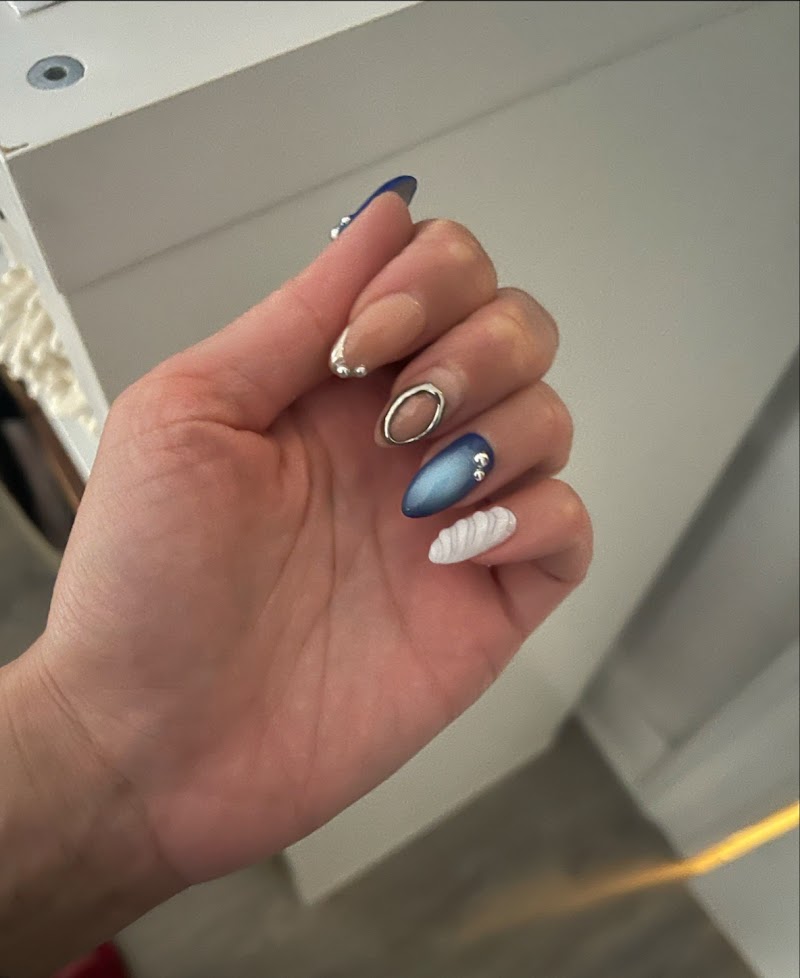
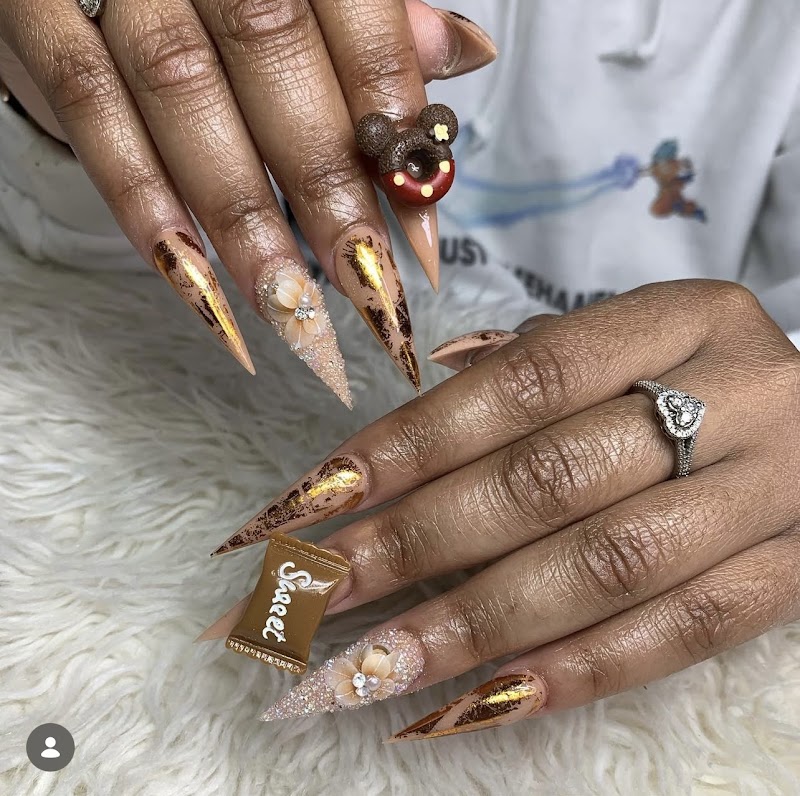
♡ Tap a heart to save a look
View style board →Quick Facts
- Shapes covered
- 8 main shapes
- Easiest everyday
- Squoval or oval
- Best for short nails
- Oval or round
- Most dramatic
- Stiletto or coffin
- Most practical
- Square or squoval
NailAtlas Editorial
Guidance grounded in market data from the 3,300+ nail salons we've indexed.
The main nail shapes are square, round, oval, squoval, almond, coffin (ballerina), stiletto and flare. Squoval and oval are the easiest everyday shapes, almond makes fingers look longest, and coffin, stiletto and flare need extensions.
Nail Shapes Chart
| Shape | Tip | Length needed | Maintenance |
|---|---|---|---|
| Square | Flat, sharp corners | Short to medium | Low |
| Round / Oval | Rounded | Short to medium | Low |
| Squoval | Flat, soft corners | Short to medium | Low |
| Almond | Tapered to a soft point | Medium to long | Medium |
| Coffin / Ballerina | Tapered, flat tip | Long (extensions recommended) | Medium to high |
| Stiletto | Sharp point | Extensions required | High |
| Flare / Duck | Widens at the tip | Extensions required | High |
The right shape depends on your nail bed width, the length you want, how hard you use your hands and the look you are after. Each shape in detail:
Every Nail Shape, Explained
Square
Best for: Wider nail beds, practical lifestyles
Flat across the top with straight sides and sharp corners. Clean, classic, and one of the most durable shapes since there are no tapered sides to snag or break.
Round / Oval
Best for: Narrow nail beds, beginners, low maintenance
Straight sides with a softly rounded tip that follows the natural shape of the fingertip. Round stays close to the fingertip; oval carries a little more length. Flattering on almost all hand types and less prone to breakage than pointed shapes.
Squoval
Best for: Anyone who wants square but more forgiving
A hybrid: square tip with slightly rounded corners. Combines the durability of square with the softness of oval, which makes it a common everyday choice.
Almond
Best for: Elongating short fingers, elegant looks
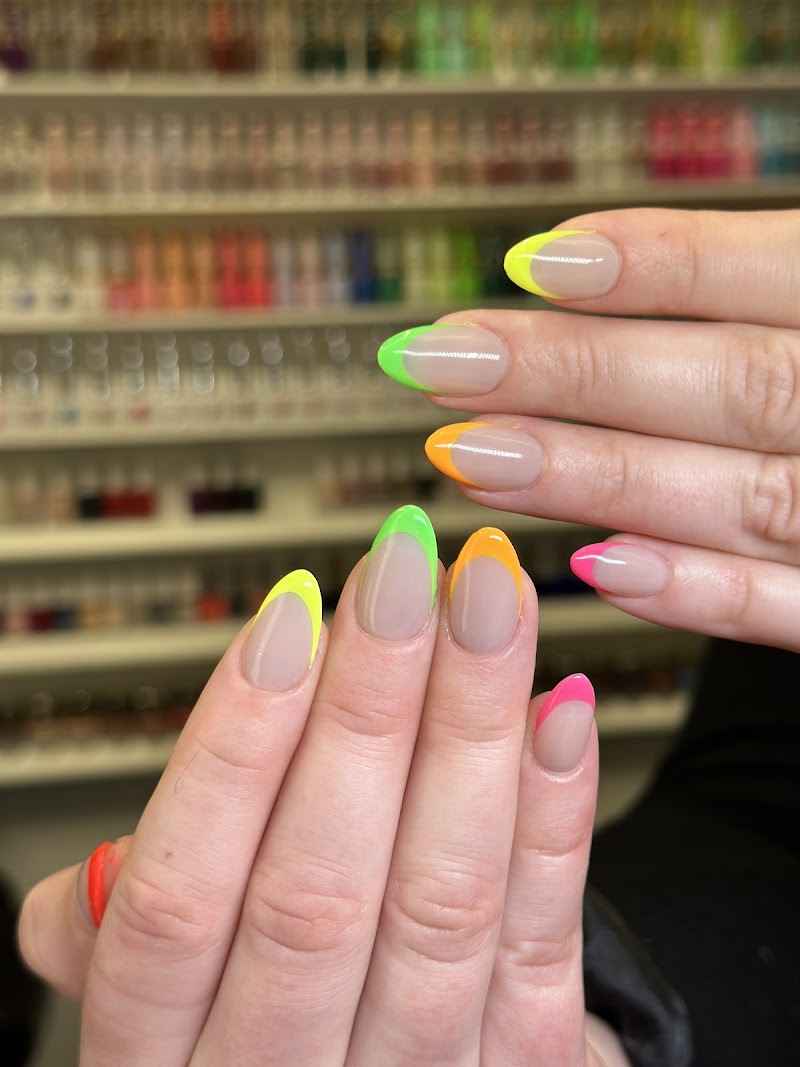
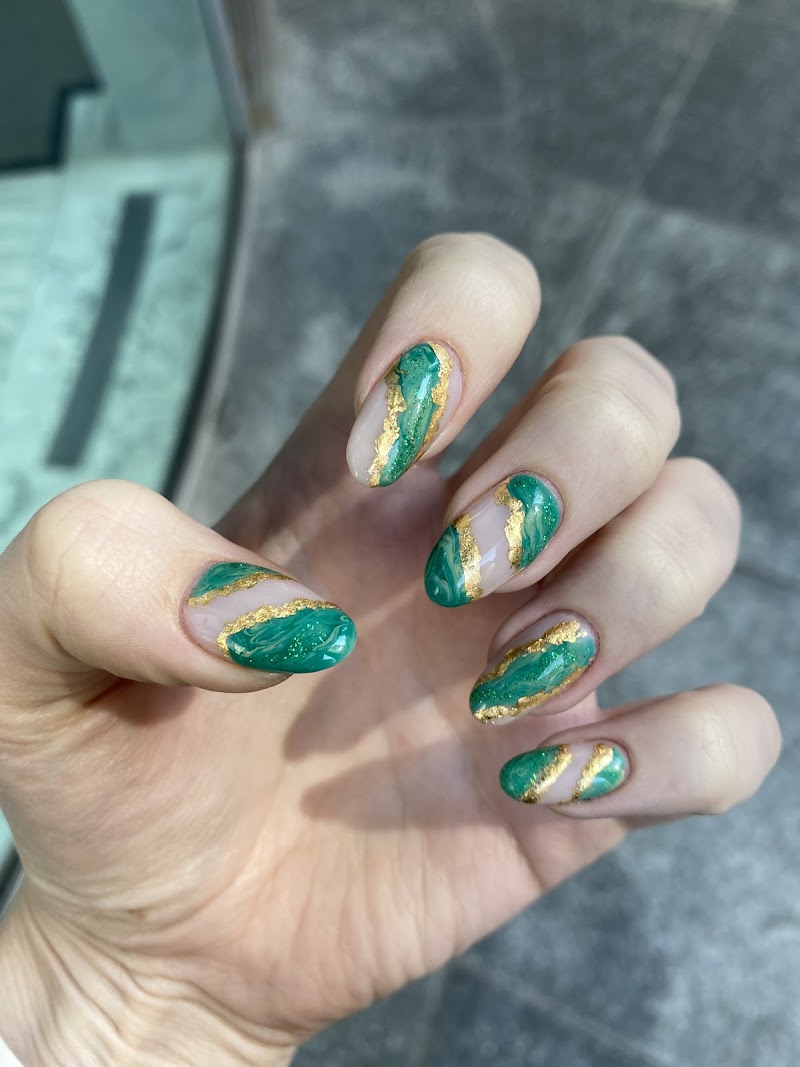
Tapered sides that meet at a rounded, soft peak, like the shape of an almond. Needs medium-to-long length to look right. A long-standing favourite for nail art.
Coffin / Ballerina
Best for: Drama, extensions, long nails
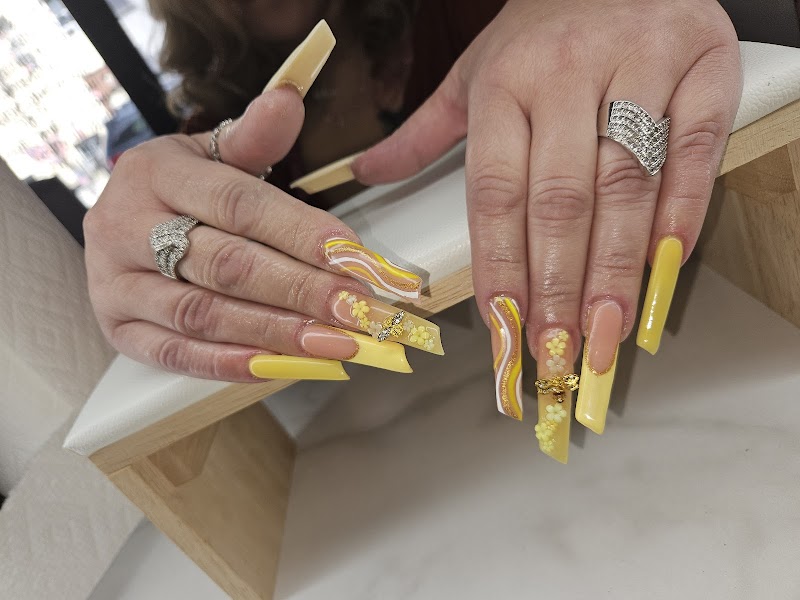
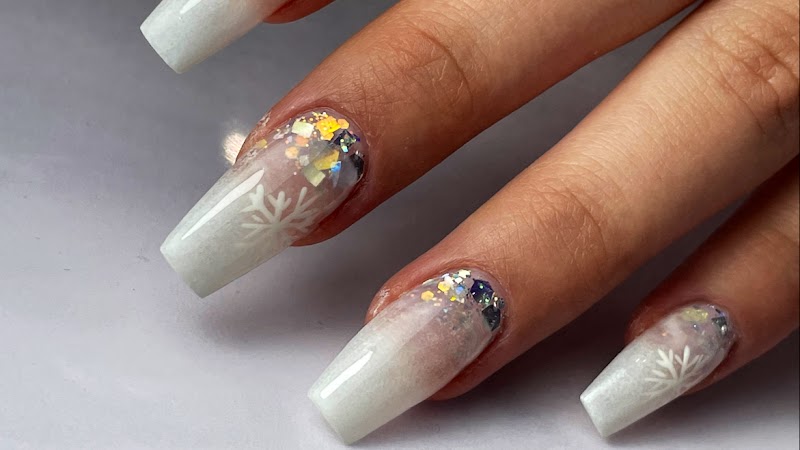
Long, tapered sides that end in a flat, squared-off tip, like a coffin or a ballet slipper. Almost always needs extensions, and a frequent request for gel and acrylic sets.
Stiletto
Best for: Maximum drama, editorial looks
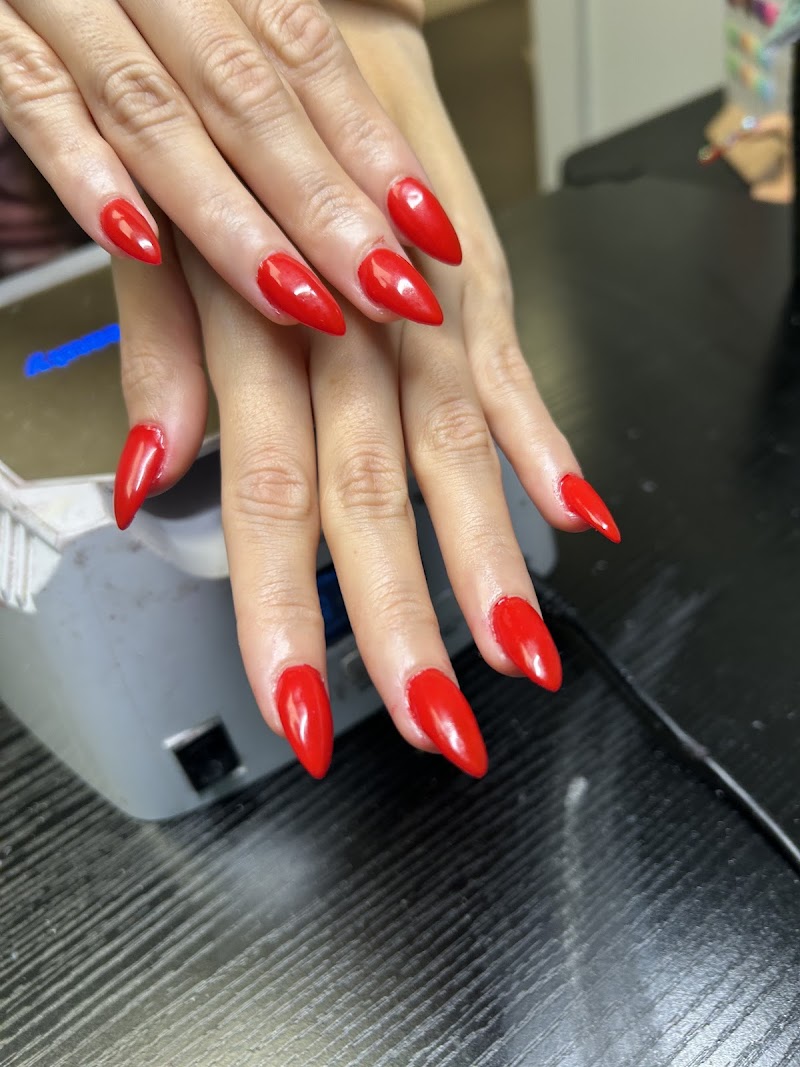
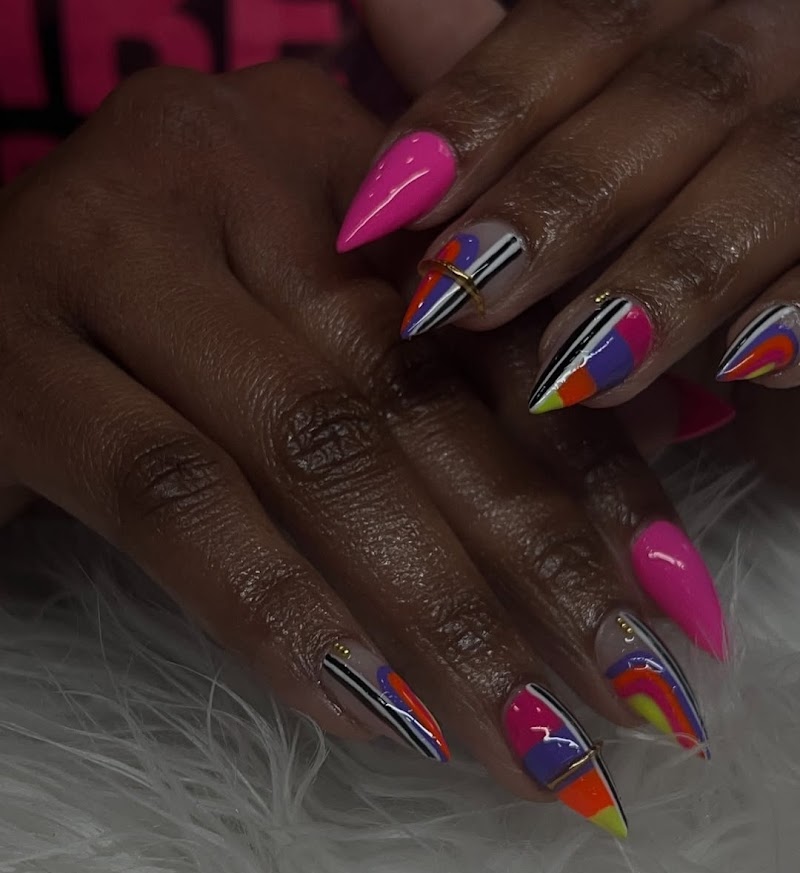
An extremely pointed tip. Almost always needs extensions or acrylic to achieve safely. Striking but high-maintenance: the point is fragile and prone to breaking.
Flare / Duck
Best for: Statement nails, a specific aesthetic
Widens toward the tip for a flared effect. A niche shape with a retro feel, popular in some nail art communities. Almost always done with extensions.
Coffin nails from the directory
Which Shape Suits Your Hand Shape?
- Wide nail beds: Almond and oval shapes make wider fingers look slimmer.
- Narrow nail beds: Square or squoval work well on slender fingers.
- Short fingers: Almond and oval create the look of length. Avoid very wide square shapes.
- Long fingers: You can wear almost any shape. Square and coffin are especially striking on long fingers.
Almond nails from the directory
New to Nail Extensions?
For a first set of extensions, start with almond or squoval. They are forgiving, flattering on most hands, and let you get used to longer nails before committing to a dramatic stiletto or coffin shape.
Shape and Product Compatibility
Not every nail product suits every shape. BIAB works best for squoval, oval or soft square, where the natural nail does the work. Gel-X can achieve any shape and is especially common for coffin and almond, thanks to the range of pre-shaped tips. Acrylic is the most versatile for extreme sculpted shapes like stiletto or flare; see acrylic vs gel for the trade-offs.
Stiletto and dramatic shapes
Nail shapes: FAQ
What are the different nail shapes called?▼
The main nail shapes are square, round, oval, squoval (square with softened corners), almond, coffin (also called ballerina), stiletto and flare (also called duck). Square, round, oval and squoval work on natural nails; coffin, stiletto and flare almost always need extensions.
Which nail shape is the most durable?▼
Square. It is flat across the top with straight sides, so there are no tapered edges to snag or break. That makes it the most practical shape for short to medium length and for hands-on work.
What is the difference between almond and oval nails?▼
Both have rounded tips, but almond tapers inward along the sides to a soft point and reads as more elongated. Oval is rounded off without narrowing to a point, so it looks softer and less dramatic at the same length.
What is the difference between square and squoval nails?▼
Square has a flat tip with sharp corners. Squoval keeps the flat tip but rounds the corners off, so it snags less and looks softer while keeping most of square's strength. If square corners keep catching on things, squoval is the usual fix.
Which nail shape suits short nails?▼
Oval or round is the most flattering, because the rounded tip creates the look of length without needing actual length. Squoval also works well. Stiletto and coffin need length to read correctly and lose their defining lines on short nails.
Do coffin nails need extensions?▼
Almost always. Coffin nails need roughly 5–8mm beyond the fingertip for the shape to work, which is more length than most natural nails carry. They are usually built with Gel-X, hard gel or acrylic.
Which nail shape makes fingers look longer?▼
Almond. The sides taper inward, which draws the eye down the length of the finger and elongates the whole hand. Oval does the same more subtly at shorter lengths.